1. Key Takeaways
● Essential Maritime Bridge: A pilot boat, also called a pilot vessel, is a fast, purpose-built boat that carries marine pilots between the port and arriving or departing ships.
● Specialized Engineering: Modern pilot boats are built from light, strong materials such as aluminum and fiberglass, giving them the speed and strength to work alongside large ships.
● High-Risk Operations: The primary role of the pilot boat is to carry out the dangerous transfer of pilots to and from a pilot ladder while both boats are under way.
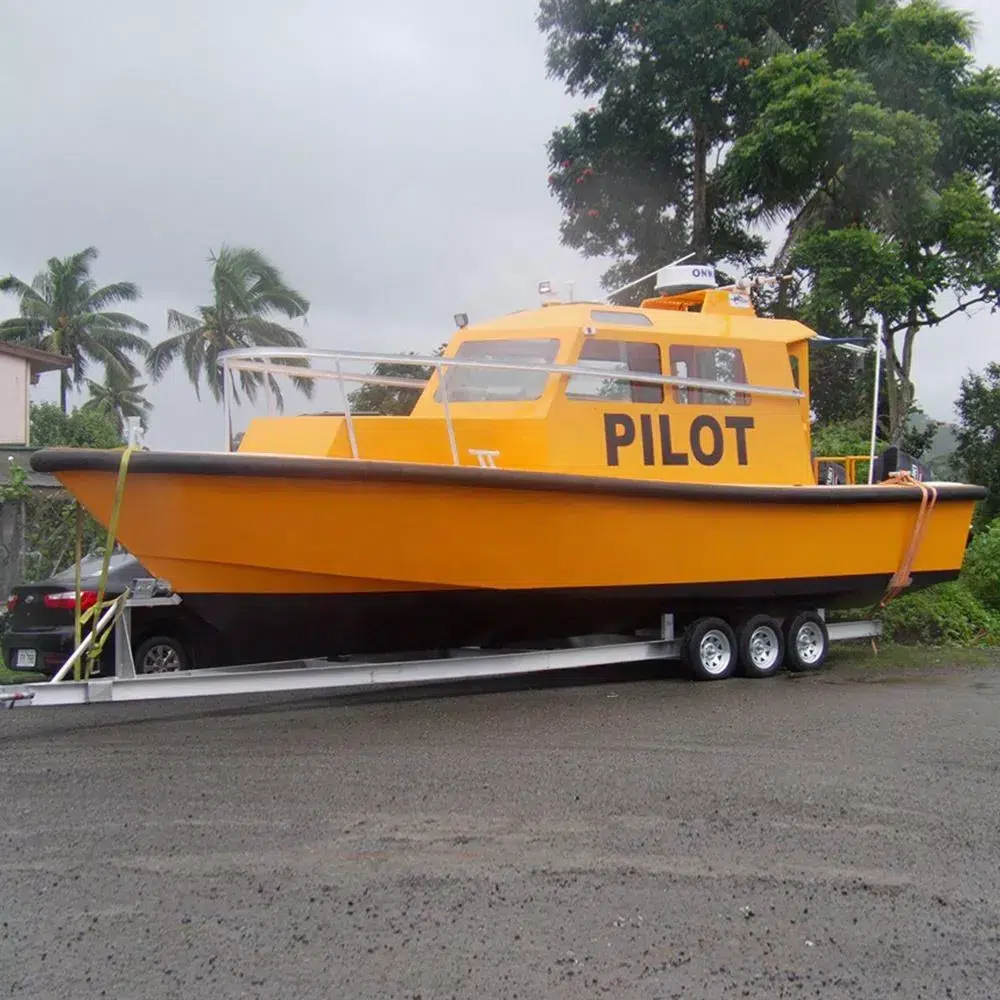
● Critical Safety Signaling: Pilot boats use high-visibility colors, “PILOT” hull markings, and a white-over-red flag or light signal so other traffic can identify them.
● Mandatory Port Service: Pilotage is compulsory in most ports, to prevent accidents and protect the marine environment from groundings and collisions.
● Local Expertise: Pilot boats deliver pilots with the local knowledge of tides, currents, and hazards needed to navigate busy or difficult waterways.
2. Defining the Pilot Boat: Engineered for High-Stakes Transfers
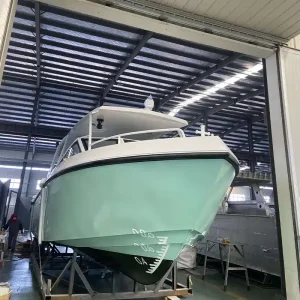
A pilot boat is a purpose-built, high-performance boat that carries marine pilots between port and the large ships they guide. Unlike leisure boats, pilot boats are working boats that must perform reliably in congested waterways, day and night. For a step-by-step look at planning and buying one, see our pilot boat guide.
The Anatomy of Speed and Power
Pilot boats need powerful engines to reach incoming ships quickly and to keep pace alongside ships that are still under way. Speed is not only about efficiency: matching the speed of the larger ship is a safety requirement.
Material Science in Modern Design
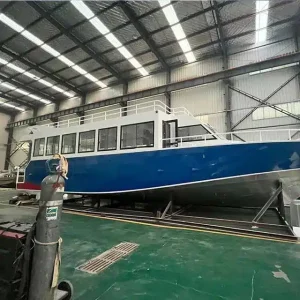
Steel was once the standard material. Some steel pilot boats are still in service, but most modern boats are built from aluminum or fiberglass, which offer a better strength-to-weight ratio and give the boat both the durability to take impacts and the agility to maneuver in tight spaces.
Visual and Audible Identification
Because they work in busy harbors, a pilot boat must be easy to recognize.
● High-Visibility Colors: Most are painted yellow, orange, or red so they stay visible in poor weather.
● Hull Markings: The word “PILOT” is painted in large letters on both sides of the hull.
● Unique Numbers: Large identification numbers on the side, a tradition from the days of sail.
Built for Impact
Pilot boats take heavy loads. They must be strongly built to handle rough seas and repeated contact with the hulls of tankers and container ships.
Note: Modern pilot boats carry heavy-duty fendering to protect both boats from damage during transfers alongside larger ships.
3. The Operational Life Cycle of a Pilot Boat in Port Operations
The work of a pilot boat starts well before it leaves the dock. It is a coordinated process designed so that no ship is left waiting at the harbor entrance.
Pre-Arrival Scheduling
Ships request a pilot in advance from the local port authority or pilotage company. Instead of the old “first come, first served” system, pilots are now scheduled around each ship’s Estimated Time of Arrival (ETA).
The Intercept Maneuver
Once dispatched, the crew uses radar and navigation equipment to locate the ship, then comes alongside its towering hull while both are moving, a maneuver that demands great skill from the operator.
The High-Risk Transfer (The Pilot Ladder)
This is the most dangerous part of the operation. The pilot often has to climb a rope ladder hanging down the side of the ship.
● The pilot boat must hold position precisely so the pilot can step onto the ladder safely.
● The pilot climbs the ladder to the deck and goes to the bridge.
● The ship’s captain remains in command, while the pilot directs the navigation.
The Return Trip
When the ship has berthed, or has left the harbor for open water, the pilot disembarks, climbing back down to the waiting pilot boat for the return to shore and the next assignment.
|
Phase |
Key Action |
Primary Equipment |
|
Dispatch |
Coordinating ETA with Port Authority |
VHF Radio/Scheduling Software |
|
Intercept |
Matching speed with the ship |
High-performance engines |
|
Transfer |
Climbing the rope ladder |
Pilot Ladder/Safety Harness |
|
Retrieval |
Pilot returns to the boat |
Fendering/Low-profile Decks |
4. How the Pilot Boat Supports Harbor Navigation and Safety
Beyond transport, the pilot boat is a key part of a harbor’s safety system. It puts pilots on board where they can apply their knowledge of local tides, currents, and regulations.
Bridging Local Expertise
Marine pilots are experienced mariners with detailed knowledge of one waterway. They guide ships past hazards such as shoals and river mouths that a visiting captain may not know.
VHF Coordination
The pilot uses the ship’s radio and communication systems to coordinate with tugs, other ships, and harbor authorities, so that every move in a congested area is planned.
Real-Time Hazard Assessment
Before and during the passage, the pilot reviews charts, weather, and Notices to Mariners to plan a safe route, and uses radar, GPS, and electronic chart systems (ECDIS) to avoid hazards.
Emergency Response and SAR
Between transfers, pilot boats often take on secondary roles. Their speed and strength make them useful for search and rescue (SAR) and for towing small boats in distress.
5. Essential Signaling: The Language of Pilotage Flags and Lights
Port communication is not only by radio. Visual signals let other ships understand a situation from a distance.
The “G” Flag (Golf)
A ship that needs a pilot flies the “G” flag, six vertical stripes alternating yellow and blue. It tells the port authority and any nearby pilot boat that the ship is requesting a pilot.
The “H” Flag (Hotel)
Once the pilot is on board, the ship flies the “H” flag, divided vertically into white and red halves. It tells other traffic that a pilot is on board.
Nighttime Operations
At night, an on-duty pilot boat shows two all-round lights, white above red, so it cannot be confused with other working or fishing boats.
Preventing Maritime Collisions
These standard signals reduce the risk of groundings and collisions, keep traffic moving, and protect ships and the environment.
6. Mandatory vs. Voluntary Pilotage: When Is a Pilot Boat Required?
In most ports worldwide, using a pilot boat and a pilot is mandatory, and the service must be available around the clock.
Standard Compulsory Pilotage
Authorities require pilotage to protect port infrastructure, equipment, and the local economy from the disruption that accidents cause.
Assessing Boat Risk
Whether a ship must take a pilot usually depends on several factors:
● Size and Tonnage: Larger ships are almost always required to take a pilot.
● Cargo Type: Ships carrying hazardous cargo, such as gas or chemicals, face stricter requirements.
● Weather: Bad weather can make pilotage mandatory even for smaller ships.
Captain’s Familiarity and Exemptions
Exemptions are rare but exist. A port may exempt a captain who calls there often and has proven knowledge of the local waters.
Note: Compulsory pilotage is a regulatory safeguard, not just a matter of skill. It makes sure local environmental laws and port traffic rules are followed.
7. The Evolution of Pilotage: From Sailboats to Modern Tech
The concept of the pilot boat is centuries old, but the technology has changed dramatically.
Ancient Roots and the “First Come” Era
Pilotage dates back to ancient Greece and Rome. Local fishermen once worked as part-time pilots, and in the age of sail they raced single-masted boats out to incoming ships: the first pilot to reach the ship got the job.
The Shift to Regulation
As shipping grew, this approach was no longer good enough. Ports began licensing pilots and requiring insurance, and it became clear that pilots needed dedicated boats, not fishing boats full of nets and lines, to work safely.
Digital Integration
Today, the pilot boat is a high-tech platform, and crews rely on modern instruments:
● GPS and Radar: For precise positioning and tracking in fog or darkness.
● ECDIS: Electronic chart systems that show water depth and hazards in real time.
● Automated Scheduling: So the boat meets the ship at exactly the right time.
8. Conclusion
The pilot boat remains essential to the smooth flow of global trade. Its specialized design helps large ships navigate the world’s most difficult harbors safely. Poseidon Boat builds aluminum pilot boats for these demanding port operations. As ports get busier, a reliable pilot boat remains the essential link for safe pilot transfers.
Planning a pilot boat project? Send us your requirements and operating conditions, and our engineers will recommend a configuration and quotation.